

          |
  |


Pier Foundation
The pier foundation is probably the most critical part of the observatory. It must be extremely stable and resistant to vibrations that could ruin long-exposure astrophotos. Therefore, the foundation must be very deep (below the frost line) and isolated from the observatory floor, where simply walking around can transmit vibrations to the pier. This means that the foundations must be done in two separate pours, one for the pier and one for the floor around it. There will be a 3" gap between the pier and surrounding floor.
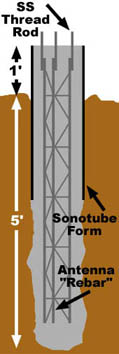
The pier foundation will be 12" in diameter and approximately 5' deep. It will extend only about 12" above ground level. After the floor is poured, the top of the foundation will be only about 6" above the top of the floor. The rest of the pier height up to the telescope mount will be made up of the pier extension. (See the construction notes of the pier extension.)
We used a large earth auger to dig the 12" diameter 5' deep hole. A sonotube was used for the top half of the concrete form, but the bottom portion was left roughed-in. This way, the dirt walls will be more compacted and stable than if backfilled around a sonotube later.
Click on images to enlarge:
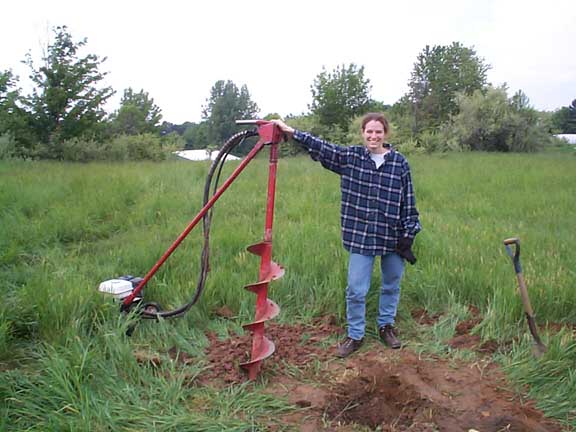 The Giant Earth Auger |
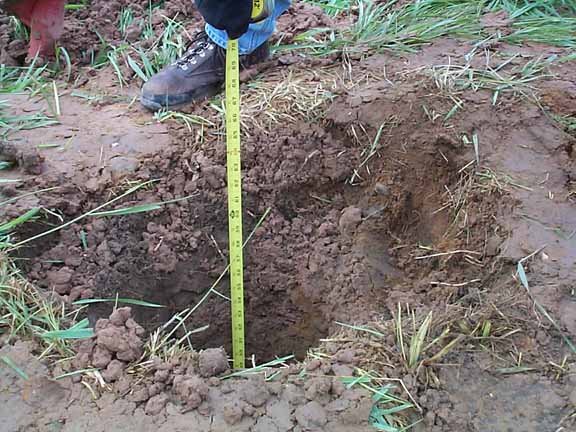 About 5' Deep |
Instead of using traditional rebar in the concrete, we "recycled" a portion of an old TV antenna mast to reinforce the foundation. Instead of using anchor bolts, short lengths of stainless steel thread rod were welded directly to the antenna. Protruding from the top of the foundation, these will be used to bolt on the steel pier extension.
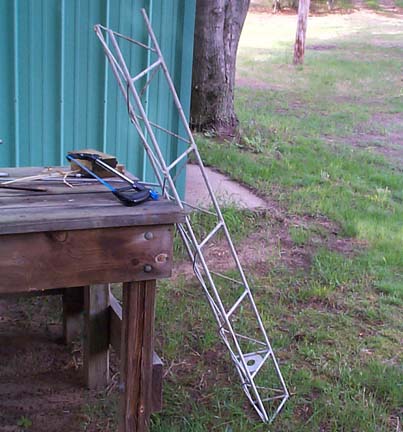 |
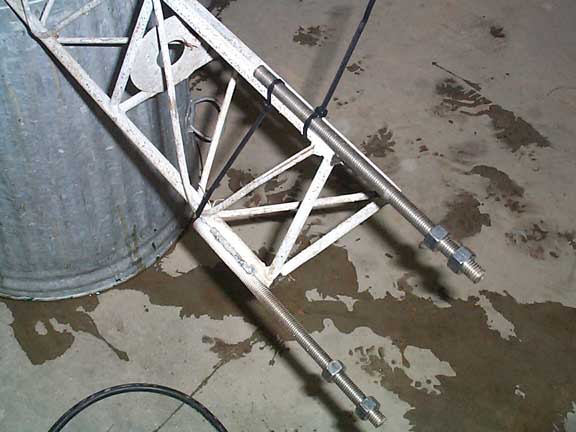 Welding on the Thread Rod |
On "Concrete Day," we used eleven 60 lb. bags of Sakrete to fill up the foundation column. Of course, we had to rent a 1/4 yd. towable concrete mixer to do the job. The top portions of the thread rod were covered with vinyl tubing to keep the threads clean and concrete-free. After adding our initails to the top (who could resist?), and letting it cure, the sonotube was peeled away to reveal the finished product!
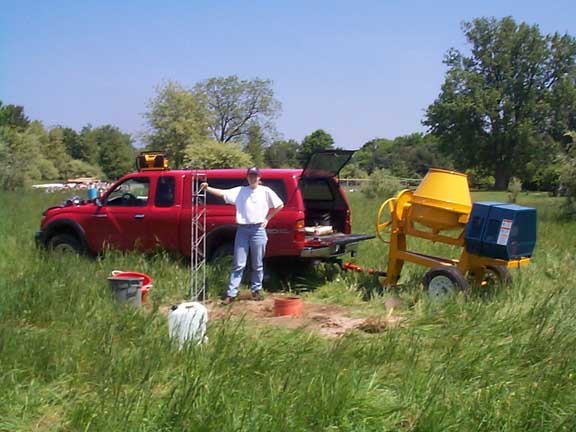 Concrete Day! |
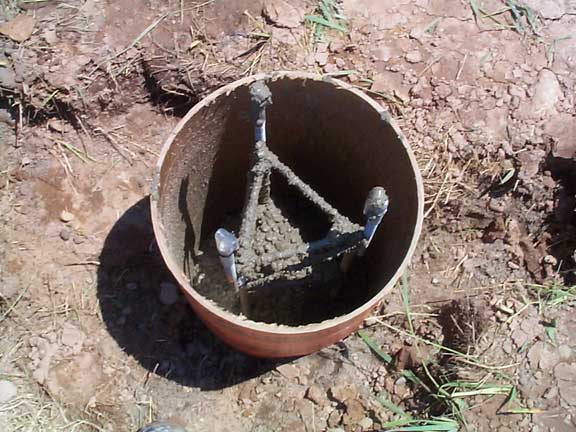 Pouring the Concrete |
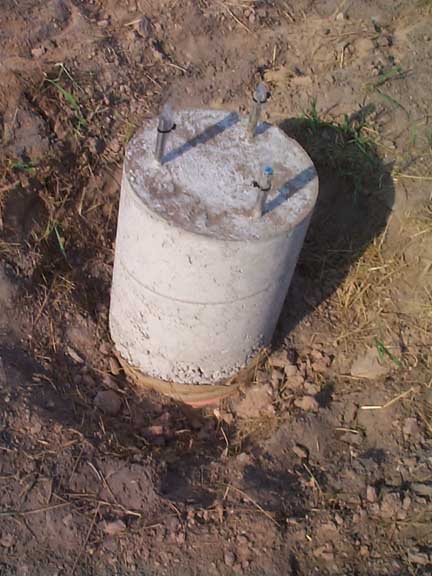 The Finished Product! |